Tree Removal Installation in Tamarac, FL
Tree installation and replanting in Tamarac, FL after a removal. Right species, right placement for sandy soil and a high water table. Ask about your yard.
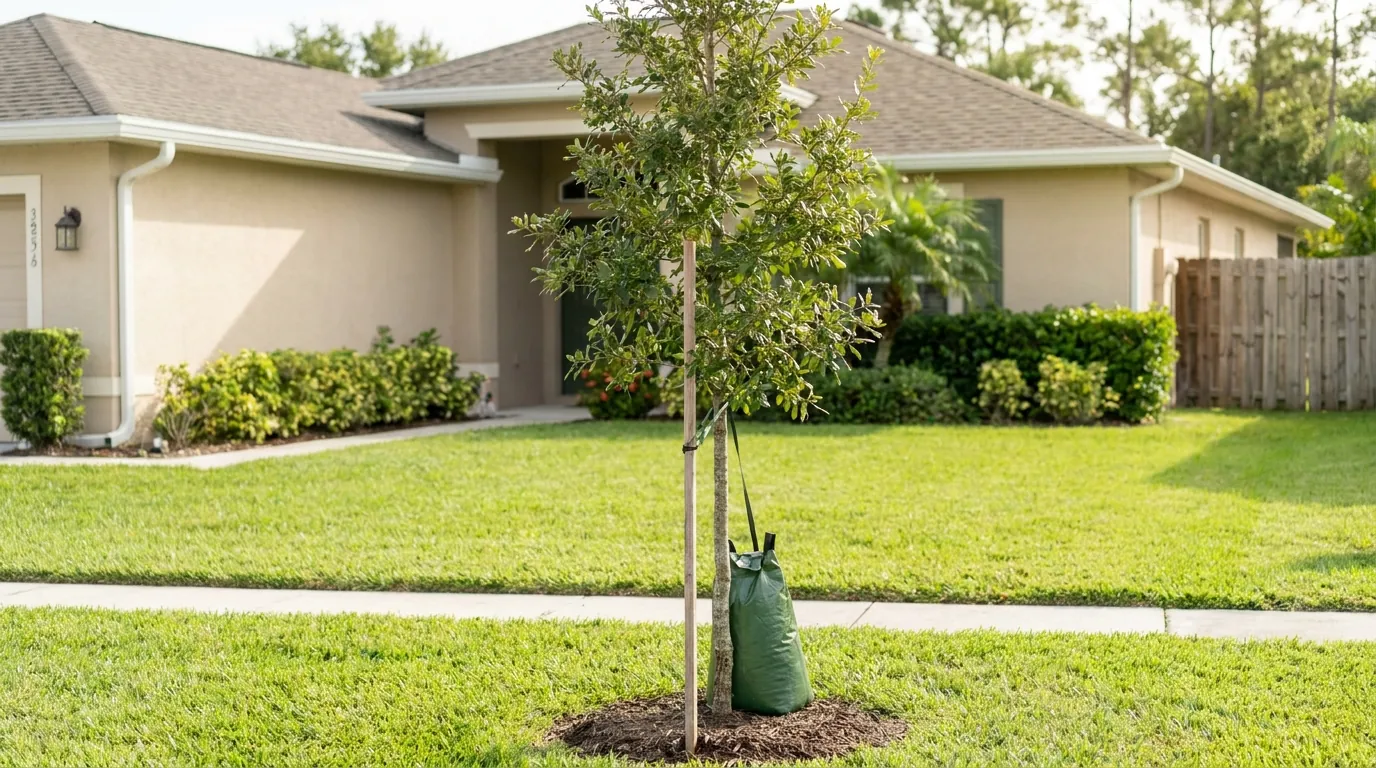
What to plant after a tree comes out
Taking a problem tree out is often only half the job. The gap it leaves changes the yard — more sun on the lawn, less privacy, a different look from the street — and many homeowners want something back in that spot. Tree removal installation is the replanting side of the work: picking a species that fits Tamarac's conditions, placing it where it will not become the next problem, and getting it in the ground correctly so it establishes.
The most common mistake is replanting the same kind of fast-growing, top-heavy tree that failed in the first place, in the same spot too close to the house. A better replacement is chosen around three things: how big it gets, how well its roots handle sandy, wet soil, and how far it needs to sit from foundations, pavement, pool cages, and overhead lines. Getting those decisions right is what keeps a new tree from becoming a future removal.
How replanting works
A tree that establishes well starts with the right choice and the right hole, not just a plant dropped into the old stump crater.
-
Site and soil review
We look at how much sun the spot now gets, how close it is to structures and lines, and how the soil drains. In Tamarac that means checking how high the water table sits, because a species that dislikes wet feet will struggle here.
-
Species selection
We suggest trees suited to sandy soil, humidity, and periodic saturation, sized so their mature spread and root reach fit the space. The goal is a tree that thrives without crowding the house or lifting the driveway.
-
Prepare the planting area
If a stump was ground out, the old grindings and loose fill are not ideal to plant into. We prepare a proper hole at the right depth so the root flare sits at grade — planting too deep is a common cause of decline in our wet soils.
-
Plant and backfill
The tree goes in straight, backfilled with native soil and firmed to remove air pockets, then watered in. We avoid burying the trunk and skip the volcano of mulch that traps moisture against the bark.
-
Establishment guidance
We explain how to water through the first dry season and what to watch for, since the first year decides whether a new tree makes it.
Planting for Tamarac's soil and climate
Sandy soil drains fast at the surface but sits over a high water table, so a new tree's roots have to tolerate both quick-drying topsoil and saturated ground below during the rainy season. That narrows the list of species that do well long-term, and it changes planting depth — set a tree too low and the roots suffocate in wet soil. We plant to keep the root flare at grade so the tree can breathe.
Humidity means young trees are prone to fungal issues if they are crowded or kept constantly wet at the trunk, so spacing and mulch technique matter more here than in drier climates. Placement also looks ahead to storm season: a replacement set a sensible distance from the house, with room to develop a sound structure, is far less likely to need our tree removal service down the road.
If the tree you are replacing came down in a storm, our tree removal repair work handles the cleanup first, and then installation gives you a fresh start with a better-suited tree in a better spot.
Ready to replant the gap?
Tell us about the spot — how much sun it gets and what is nearby — and we will suggest replacement trees that fit Tamarac's soil and your yard, then plant them to establish well.
Serving Tamarac and surrounding Broward County towns.
Frequently asked questions
Can I plant a new tree right where the old one was?
Often yes, but the ground stump grindings and loose fill are not ideal to plant into, so the area usually needs to be prepared first. We set the hole at the correct depth in suitable soil so the new tree's root flare sits at grade.
What kind of tree should I plant in Tamarac?
One suited to sandy soil, humidity, and a high water table, and sized so its mature spread and roots fit the space away from your house and pavement. We match the choice to your specific spot rather than recommending one tree for every yard.
How far from the house should a new tree go?
It depends on the species' mature size and root spread. The point is to give the tree room to grow a sound structure without crowding the foundation, driveway, pool cage, or overhead lines, which is how you avoid a future removal.
How much care does a newly planted tree need?
The first year is the critical one. It needs consistent watering through the dry season while the roots establish, careful mulching that does not pile against the trunk, and a bit of monitoring for stress. After it establishes, most well-chosen trees need far less attention.