Brush and undergrowth removal
Vines, palmetto, shrubs, and the low tangled layer are cut and hauled off. This alone often transforms how a lot reads and exposes what is actually growing on it.
Overgrown lots, invasive brush, and tangled undergrowth cleared in Tamarac, FL. What the work involves and how to decide what stays and what goes.
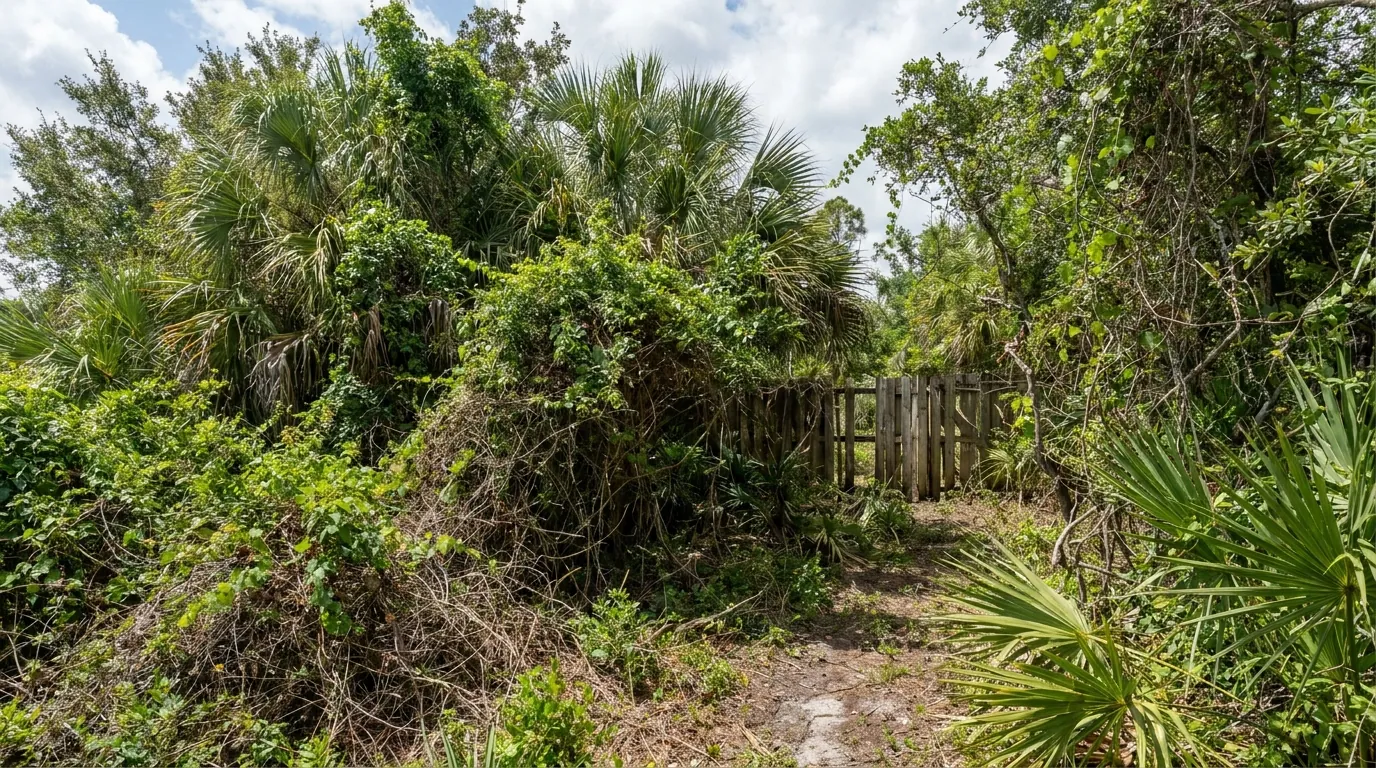
In the Tamarac climate, land does not stay clear on its own. A vacant lot or a neglected corner of a property fills in fast — palmetto, vines, Brazilian pepper, volunteer trees, and a tangled understory that can hide the actual boundaries of the parcel. Lot and brush clearing is how you take that ground back and make it usable again.
People clear lots for different reasons: to build or add on, to open a sightline, to reduce fire and pest habitat near a structure, or simply to see the property line again. The right approach depends on what you want the ground to do next, which is why the first step is always a walk-through, not a chainsaw.
Local conditions shape the job. High humidity and a high water table feed aggressive growth, so brush comes back quickly if roots and stumps are left behind. Sandy soil makes machine access easier in dry spells but turns soft and rutted after rain, so timing the work around the weather matters more here than in drier regions.
A clearing project can be as light as cutting back an edge or as full as taking a lot down to open ground.
Vines, palmetto, shrubs, and the low tangled layer are cut and hauled off. This alone often transforms how a lot reads and exposes what is actually growing on it.
Brazilian pepper, Australian pine, and other aggressive invaders spread fast in South Florida. Removing them opens the lot and slows the regrowth that chokes out everything else.
Self-seeded trees and saplings crowding a space are taken down and sectioned. Larger trees worth keeping for shade or privacy are flagged to stay.
Cut material is removed rather than left to rot and re-sprout. Stumps that would interfere with future use are ground down so the ground is ready for whatever comes next.
Clearing is more controlled than it looks. A walk-through up front prevents mistakes you cannot undo.
We walk the property with you to mark what stays and what goes. Mature trees that provide shade or privacy are often worth keeping; invasive species, dead wood, and anything crowding a structure usually comes out.
Vines, palmetto, shrubs, and the tangled low layer are cut and removed first. This exposes the ground, the real property lines, and any larger trees hiding inside the growth.
Volunteer trees and invasives are taken down and sectioned. Trees too large or close to structures to drop safely are handled with the same care as a standalone removal.
Stumps left in a cleared lot sprout, rot, and get in the way of future work. Grinding them down and hauling off the cut material leaves ground that is ready for the next step.
Before clearing, it is worth being clear about the end goal. Clearing for a building pad is different from clearing for a cleaner yard — the first wants bare, gradable ground, the second often keeps the best trees and just removes the chaos around them. A good plan keeps the trees that add value and removes the ones that are a liability.
If the lot has a few large trees you are unsure about, a tree health assessment can tell you which are sound enough to keep. For single large specimens that have to come out regardless, see our tree removal page for how those are handled.
Yes, and that is usually the better approach. During the walk-through we flag mature, healthy trees worth keeping and clear the brush and invasives around them, which often improves the trees that remain.
Tamarac's humidity, rainfall, and high water table create ideal conditions for aggressive growth. If roots and stumps are left behind, many species resprout within a season, which is why grinding stumps during clearing makes a lasting difference.
Usually yes. Species like Brazilian pepper and Australian pine spread aggressively and crowd out desirable plants, so removing them early slows the regrowth that would otherwise undo the clearing.
Sandy soil holds up well when dry but ruts easily after heavy rain, so we time machine work around the weather when possible. Light hand clearing has far less ground impact than full mechanical clearing.
Yes. Leaving cut brush and wood on a lot invites rot, pests, and resprouting, so the material is sectioned and hauled off as part of the job.
Call to describe the problem and get a quote for work in Tamarac, FL.