Stump Grinding in Tamarac
Stump grinding in Tamarac, FL to clear old stumps and surface roots. How grinding works, how deep it goes, and what the sandy soil means for the job.
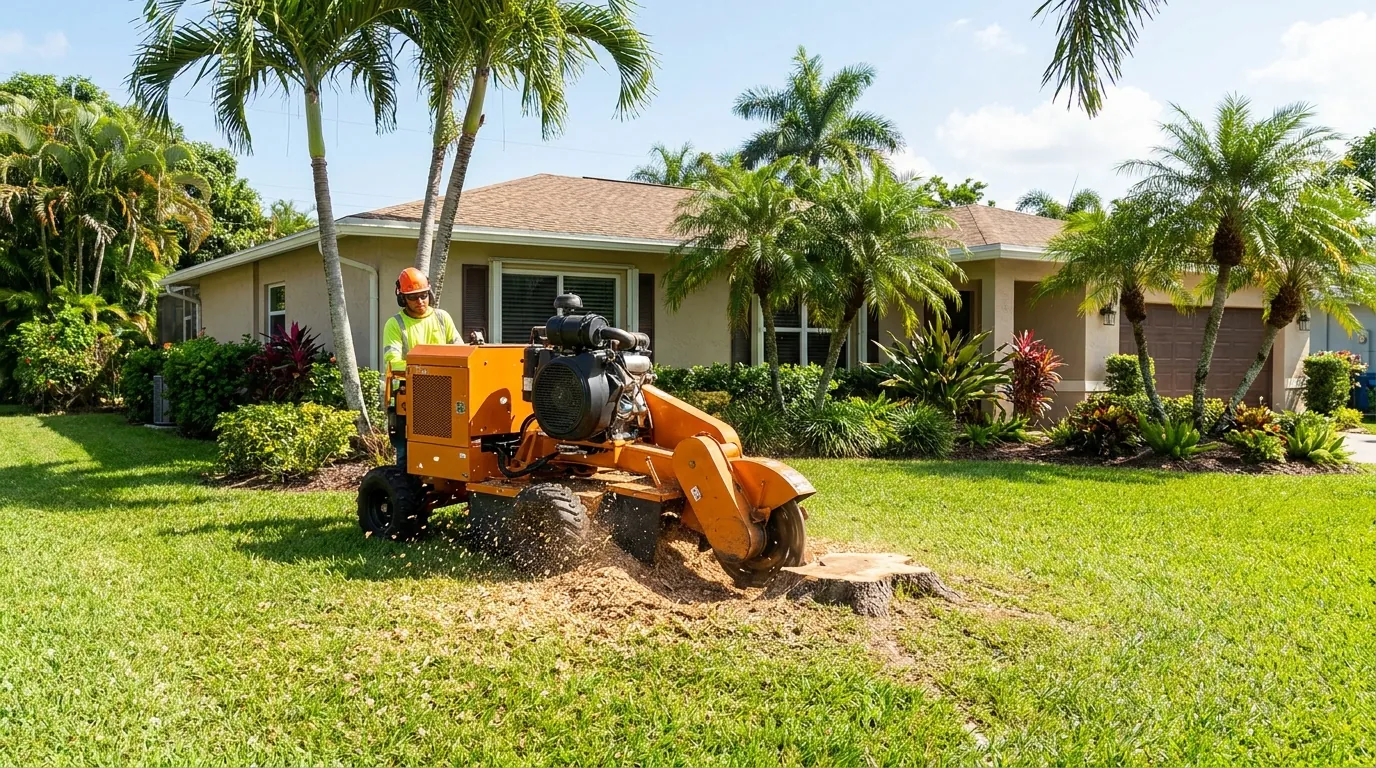
Why that leftover stump is worth dealing with
A stump left in the ground does more than look unfinished. In Tamarac's warm, humid, moist soil, a stump is a steady invitation to termites, carpenter ants, and wood-decay fungi, and many species will keep sending up suckers from the roots long after the tree itself is gone. Stumps also get in the way — they block mowing, make it impossible to sod or replant the spot, and surface roots can crack pavers and lift a driveway over time.
Grinding the stump out is the clean way to finish a removal. It is separate work from taking the tree down, so if you've already had a tree removed — or you're planning it as part of tree removal — grinding is the step that actually clears the ground for whatever comes next, whether that's new sod, a planting bed, or a patio.
How stump grinding works
A stump grinder is a machine with a rotating cutting wheel that chews the stump down below grade. The process is straightforward but there are decisions along the way.
-
Clearing and checking the area
We clear debris from around the stump and check for sprinkler heads, lines, and utilities near the surface — important in Tamarac yards where irrigation lines often run shallow in sandy soil.
-
Grinding below grade
The cutting wheel reduces the stump and the main surface roots to chips, typically several inches below the soil line — deeper if you plan to replant or lay sod over it.
-
Dealing with surface roots
For trees like ficus and oak that send roots running near the surface, we can grind down the problem roots that are lifting pavers or breaking through the lawn, not just the central stump.
-
Backfilling the hole
Grinding produces a pile of wood chips mixed with soil. We can backfill the hole with the grindings or haul them off and bring in clean fill, depending on whether you're planting or just leveling.
What local soil means for grinding
Sandy soil generally works in your favor for grinding — it's easier on the machine than rocky ground and backfills smoothly. The catch in Tamarac is the high water table and shallow irrigation: after heavy rain the ground around a stump can be saturated, and we locate sprinkler lines before cutting so the grinder doesn't catch a pipe. Grinding depth is also a judgment call based on what you plan to do with the spot. If you intend to replant a tree in the same place, we grind deeper and remove more of the root mass; if you just want level lawn, a standard depth is enough.
One thing to understand is that grinding removes the stump and major surface roots, not the entire root system — fine roots left in the soil simply decay over time, which is normal and not a problem for sod or most plantings. If you're clearing several stumps or an overgrown corner of the property, that often pairs with lot and brush clearing so the whole area is handled at once.
Clear that stump for good
Tell us how many stumps you have and what you want to do with the space, and we'll explain the grinding depth and cleanup that fits your plans.
Serving Tamarac and neighboring Broward towns.
Frequently asked questions
How deep do you grind a stump?
A standard grind goes several inches below the soil line, which is enough for sod or lawn. If you plan to replant a tree in the same spot, we grind deeper and remove more of the root mass so the new tree has room.
Will the whole root system be removed?
Grinding takes out the stump and the major surface roots, not every fine root. The remaining roots decay naturally in the soil over time and won't interfere with new grass or most plantings.
What happens to the wood chips?
Grinding creates a mix of chips and soil. We can backfill the hole with those grindings, or haul them away and bring in clean fill if you want a planting-ready bed — your preference.
Can you grind roots that are lifting my pavers?
Often yes. Surface roots from ficus and oak that crack driveways and lift pavers can be ground down along with the stump, though we check first for any that are too close to a foundation or utility line to safely cut.