Canopy thinning
Selectively removing crowded interior limbs so wind passes through instead of pushing against a solid wall of leaves — the single most useful cut for storm resistance here.
Tree trimming and pruning in Tamarac, FL to reduce storm risk, clear structures, and keep trees healthy in our humid, wet climate. What good pruning involves.
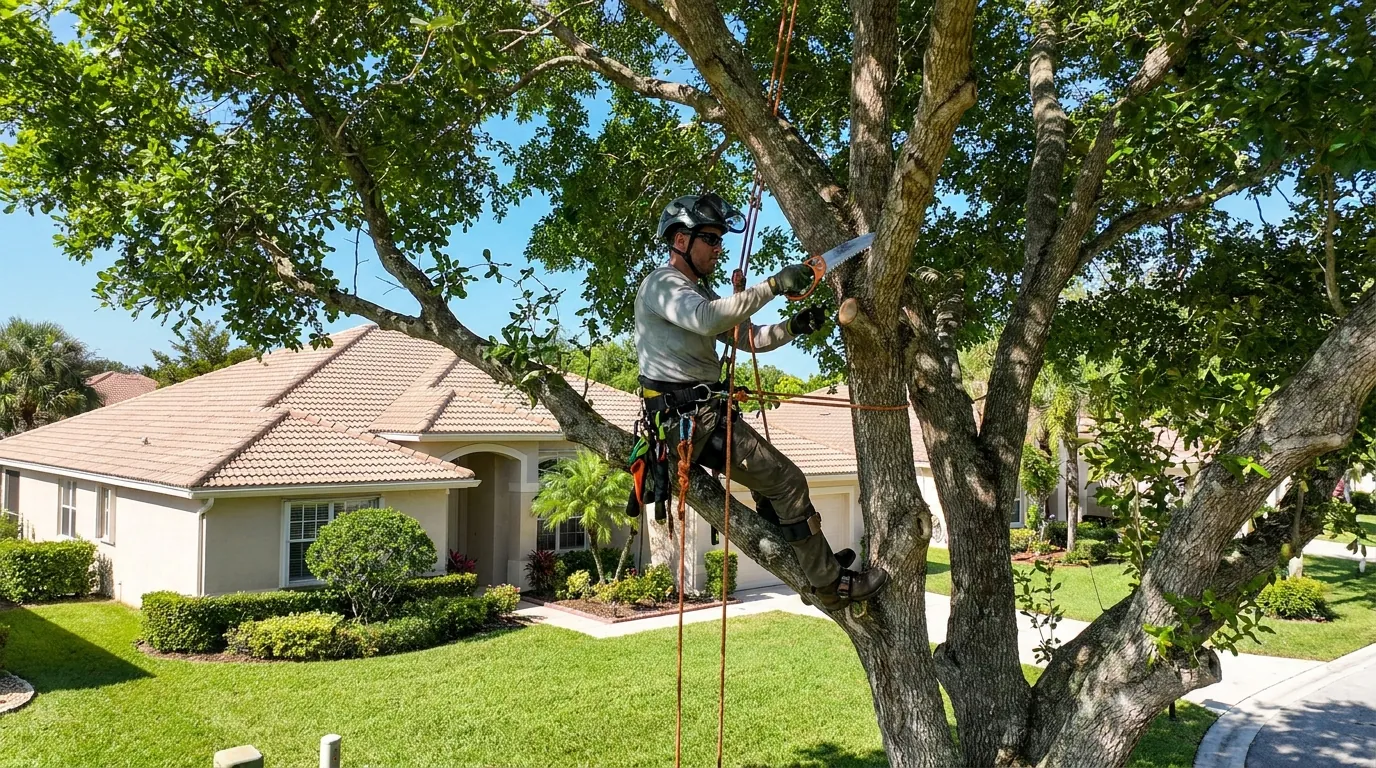
In a climate that pushes growth nearly year-round, Tamarac trees fill out fast — and a dense, heavy canopy is exactly what the wind grabs during storm season. Good tree trimming is less about shaping a tree to look a certain way and more about reducing the sail area the wind can catch, removing dead and weak wood before it falls, and keeping limbs off roofs, screen enclosures, and power service. Done well, pruning makes a tree safer and healthier; done badly, it invites decay and weak regrowth.
The common mistake you'll see around South Florida is topping — cutting large limbs back to stubs. It makes a tree look smaller for a season, but it triggers a flush of fast, weakly attached shoots that are more likely to fail in the next storm, not less. Proper trimming removes selected limbs back to the branch collar and thins the canopy so wind passes through. If a tree is already dead, hollow, or past saving, trimming is the wrong tool — that's a case for tree removal instead.
Different trees and different goals call for different cuts. Most Tamarac jobs are a mix of these.
Selectively removing crowded interior limbs so wind passes through instead of pushing against a solid wall of leaves — the single most useful cut for storm resistance here.
Taking out dead and dying limbs before they drop. In our humidity, dead wood decays and loosens quickly, so this is both a safety and a health step.
Raising or cutting back limbs that touch the roof, rub a screen enclosure, block a driveway, or grow into power service lines.
Guiding a young tree toward one strong central leader and well-spaced limbs so it grows up sound rather than developing the weak forks that fail later.
When you trim matters in Tamarac. The best window for most shade trees is the drier season, before the summer storms arrive, so the canopy is lighter and more open when it matters most. Heavy pruning in the heat of a wet summer stresses a tree and can open wounds during the exact months fungal problems spread fastest in our humidity. We time and limit cuts accordingly, and we never remove more live canopy in one visit than a tree can recover from.
Palms are their own case: they need dead and spent fronds removed, but over-pruning a palm into a narrow 'hurricane cut' weakens it rather than protecting it. If you're unsure whether a tree needs trimming, removal, or just monitoring, a tree health assessment gives you a clear read before any cutting starts. Once the work is done, chipped brush is hauled away and the area is left clean.
Tell us which trees concern you and what they're growing into, and we'll recommend the right pruning — and the right timing — for your property.
Serving Tamarac and the surrounding Broward area.
Most mature shade trees benefit from a trim every two to three years, with faster-growing species sometimes needing attention sooner. The goal is to stay ahead of deadwood and canopy density rather than waiting until limbs are over the roof.
Severe hurricane cuts and topping usually do more harm than good. They trigger weak, fast regrowth and remove the healthy canopy a tree needs, so proper thinning that lets wind pass through is the better protection.
The drier season ahead of summer storms is ideal for most trees, since the canopy is lighter and wounds heal with less fungal pressure. Dead or hazardous limbs, though, can and should be removed whenever they appear.
If a tree is dead, hollow, or structurally failing, trimming won't fix it. In that case removal is usually the safer call, and we can assess the tree first so you're not guessing.