Root zone and soil
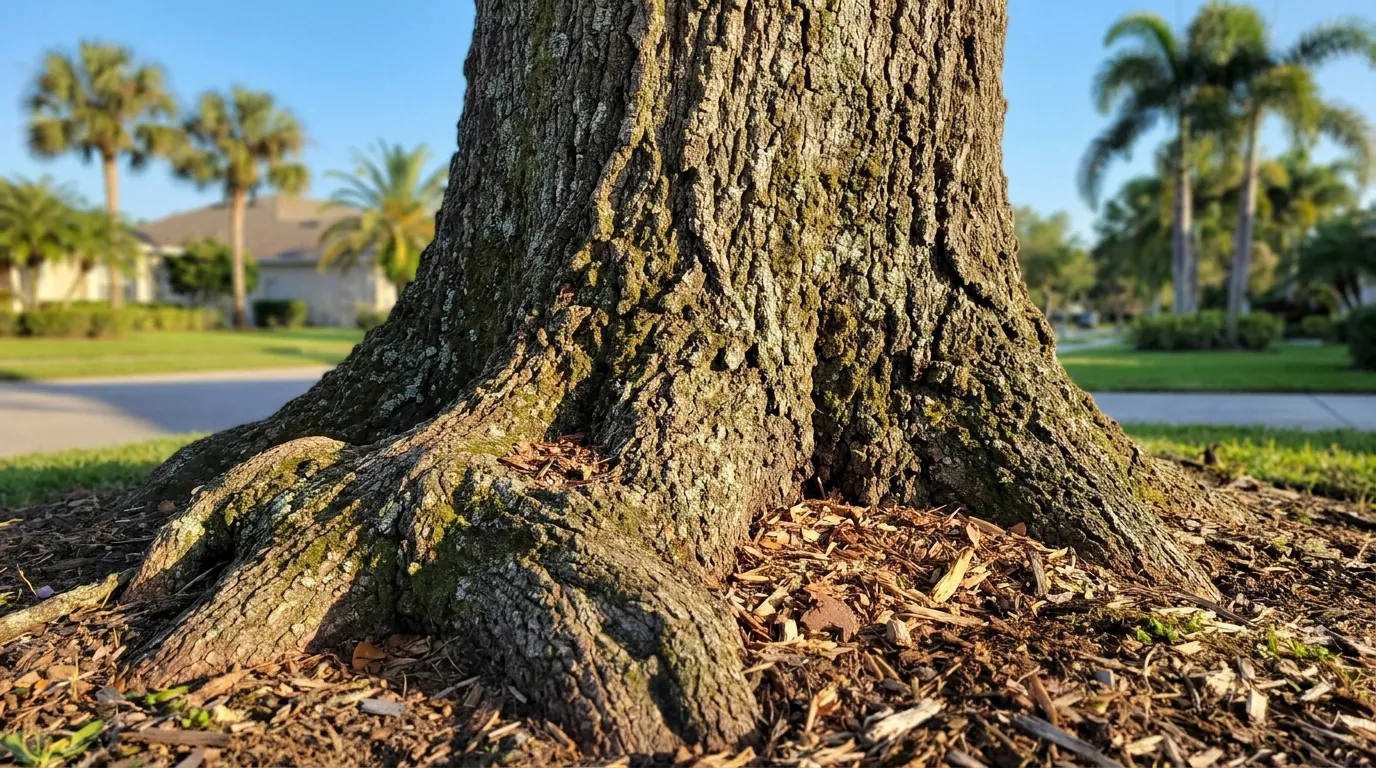
We check the root flare and the ground around it for lifting, cracking, or soft, saturated soil — the signs that a tree's anchorage is giving way, which is the most common failure mode in Tamarac's high water table.
Worried a tree is dying or unsafe? A tree health assessment in Tamarac, FL looks at warning signs and whether removal is the safer call.
A tree health assessment answers the question most homeowners actually have: is this tree safe to keep, and if not, what should I do about it? Rather than reaching for the chainsaw or crossing your fingers, you get a read on the tree's condition and the real options.
This matters in Tamarac because the warning signs here are easy to misread. A tree can hold a full green canopy while its roots are quietly failing in soft, wet soil. Another can drop leaves and look dying when it is simply stressed and recoverable. Telling those apart is the whole point of an assessment.
The things we look at are concrete: the root flare and the soil around it, the trunk for cavities, cracks, and fungal growth, the major limbs for cracks and decay, and the overall canopy for dieback. Together these tell you whether a tree is sound, needs attention, or has become a risk worth removing.
A good assessment is systematic — it checks the parts of a tree that actually predict failure.
We check the root flare and the ground around it for lifting, cracking, or soft, saturated soil — the signs that a tree's anchorage is giving way, which is the most common failure mode in Tamarac's high water table.
Cavities, seams, included bark, and fungal conks on the trunk point to internal decay. In a humid climate, mushrooms at the base are a red flag worth investigating rather than ignoring.
Weak branch unions, dead limbs, and cracks in big leads are where storm failures start. We note which limbs are a hazard and whether trimming can address them.
Thinning, dieback, off-season leaf drop, and sparse new growth tell you how the tree is really doing versus how it looks from the curb.
The point of an assessment is a clear next step, not a vague opinion.
We work from the roots up: soil and root flare, trunk, scaffold limbs, then canopy. Problems often connect — root decay shows up in canopy thinning, for example.
A hollow tree in the middle of a field is different from the same tree over a bedroom. We factor in what the tree could hit if it failed, which is often the deciding point.
Depending on findings, the answer may be routine [tree trimming](/services/tree-trimming/) to remove dead wood, monitoring and a follow-up, or removal if the structural problems are beyond fixing.
You get a plain read on whether the tree is worth keeping and what it would take — so the decision is yours, made with real information.
Good moments to have a tree looked at are after a storm, when you notice new lean or leaf drop, before you buy or build near a tree, or when a tree is simply big and close to the house and you want peace of mind. Catching a problem early often means a trim instead of a removal.
If the assessment points to removal, our tree removal page explains how that work is planned and carried out. If a tree has already failed or is actively threatening your home, that is an emergency tree service situation rather than an assessment.
Yes. In Tamarac's soft, wet soil a tree can carry a full green canopy while its roots are failing. Lifting soil or a new lean at the base matters more than how the leaves look.
Mushrooms or conks at the base, cracks or cavities in the trunk, a sudden lean, dead limbs, and thinning or off-season leaf drop. Any of these is worth a closer look, especially on a tree near the house.
No. Many assessments end with trimming, monitoring, or simply reassurance that the tree is sound. Removal is recommended only when the structural problems can't be managed safely.
After a storm, when you notice new symptoms, or before building near a tree. Catching decay or a weak union early often turns a removal into a far less costly trim.
Call to describe the problem and get a quote for work in Tamarac, FL.